
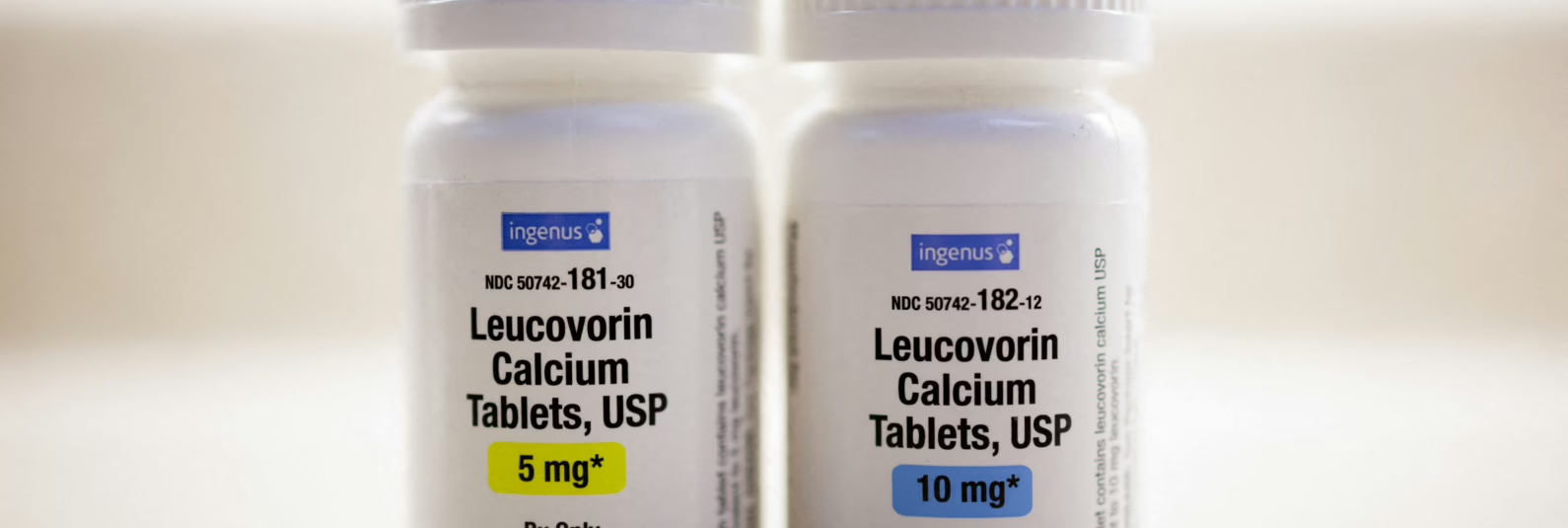
Leucovorin (folinic acid) has recently made headlines as a promising “autism breakthrough.” While research shows genuine benefit for a small subgroup of individuals with folate-transport issues, the media buzz has encouraged many families to trial it blindly—often at high doses—without confirming whether their child actually needs it.
At Gray Matters, we take a different approach.
The Problem with Blind Trialing
• Only about 15–30% of individuals with autism will benefit from Leucovorin.
• High‑dose Leucovorin can overstimulate brain chemistry, causing irritability, agitation, or regression.
• Without biomarker data, it’s impossible to know whether the treatment is helping or destabilizing brain function.
Our Targeted Approach
Before considering any high‑impact compound, we first confirm:
1. FRAA status – to determine if folate transport is actually blocked.
2. Genetic and lab context – including MTHFR, COMT, and folate/B12 balance.
3. Baseline function – so we can measure genuine, objective change.
This ensures treatment decisions are evidence‑guided, not trend‑driven.
The Takeaway
Leucovorin can be powerful — but only when it fits the biology. At Gray Matters, we move beyond one-size-fits-all “autism fixes” to provide personalized, data-driven care that prioritizes safety and clarity.